Welcome!
My name is Sophie Fortz, and I am a postdoctoral researcher in software engineering. I recently joined the DiverSE team at the University of Rennes, where I am working on the Green Software Configurations project (CONFVERT) with Prof. Mathieu Acher. In this project, I explore how software configuration choices impact both energy consumption and performance in complex, variability-intensive systems. The goal is to identify green configurations—settings that reduce energy usage while preserving acceptable performance. To do so, CONFVERT combines modelling of deep cross-layer variability with large-scale empirical data, and develops robust predictive and optimisation techniques. A strong emphasis is also placed on reproducibility, with experiments conducted on widely used open-source systems, ultimately leading to practical guidelines, datasets, and open tools for the community.
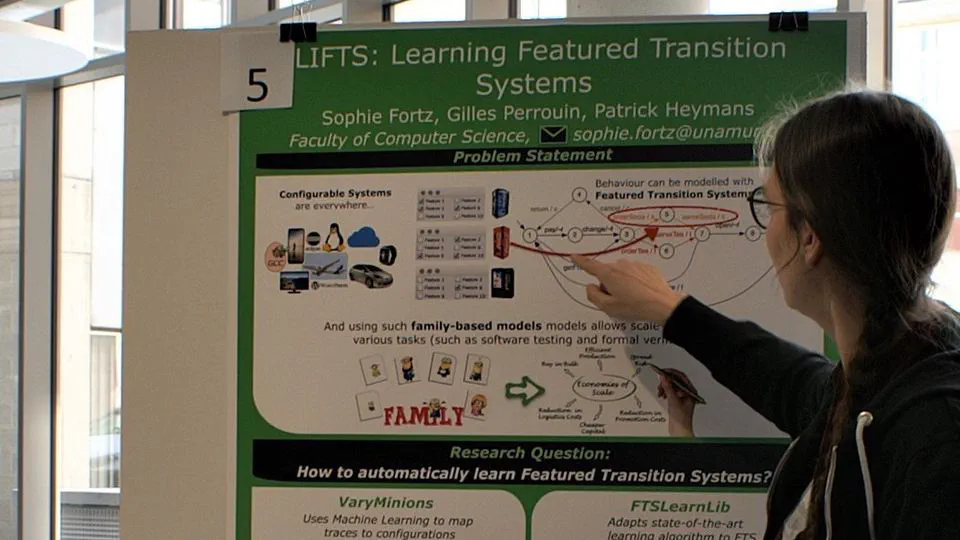
Before joining DiverSE, I completed my Ph.D. at the University of Namur under the supervision of Dr. Gilles Perrouin and Prof. Patrick Heymans. My research focused on the foundations of software engineering, with a special focus on software variability and learning software behaviour through automata learning approach. My PhD research was first supported by the FNRS EoS (Excellence of Science) VeriLearn project, and later by a competitive FRIA (FNRS) Grant. In September 2023, I successfully defended my thesis, entitled “LIFTS: Learning Featured Transition Systems”.
I then moved to King’s College London for a first postdoctoral position, where I had the opportunity to apply software engineering techniques to quantum computing within the VSL-Q project. This project focused on the verified simulation of large-scale quantum systems, addressing challenges such as platform-specific constraints, noise, and scalability. Working alongside Prof. Mohammad Reza Mousavi and a multidisciplinary team spanning physics, programming languages, and software engineering, I contributed to advancing testing techniques tailored to quantum programs.
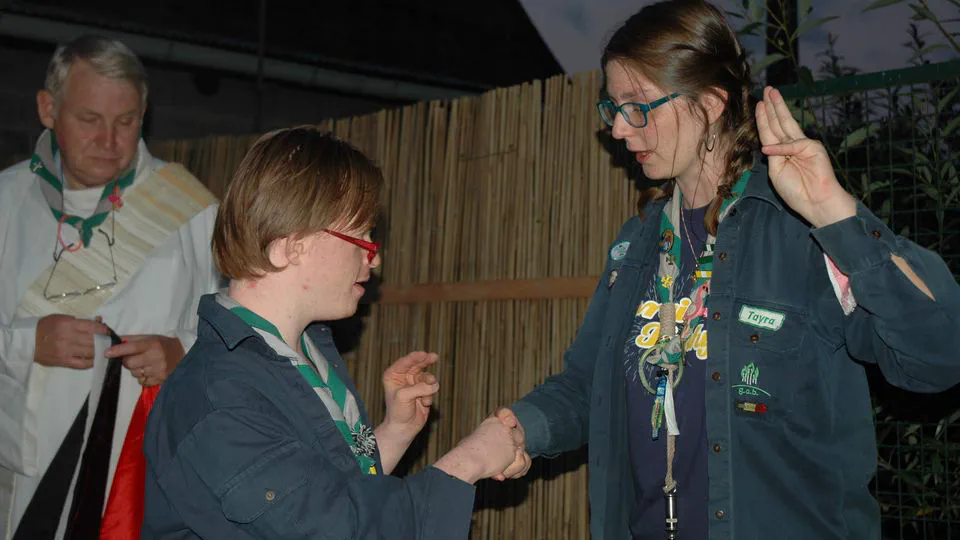
Beyond research, I enjoy taking time to read and to engage in creative activities such as drawing and painting. I was also an active member of the Belgian Guide Federation for many years, where I successively served as a guide, group leader, and trainer—an experience that greatly shaped my appreciation for teamwork, learning, and sharing knowledge.
- Software variability
- Quantum software engineering
- Behavioural modelling
- Automata learning
- Software testing
- AI4SE & SE4AI
-
National Qualification for Associate Professor (Maître de Conférences), 2025
Section 27 - Computer Science
-
PhD in Software Engineering, 2023
University of Namur
-
MSc in Computer Science, specialised in Software Engineering, 2019
University of Namur
-
BSc in Computer Science, 2017
University of Namur
Experience
-
Postdoctoral Researcher
Inria, Univ. Rennes, CNRS, IRISA Working on the CONFVERT project.
 -
Postdoctoral Researcher
King's College London Working on the VSL-Q project.
 -
Postdoctoral Researcher
University of Namur Working on the EoS VeriLearn project.
 -
PhD Student
University of Namur
My thesis is entitled Learning Featured Transition Systems. I studied how to model the behaviour of Software Product Lines and how to automatically generate those kind of models. -
ALMIN president
University of Namur The ALMIN is the alumni association of the computer science faculty in the university of Namur. This group organise activities for all the master and bachelor students who got their degree in the faculty. I am a board member of the association since 2019 and in 2021, I took the presidence.
 -
Research internship
Polytechnic University of Valencia During my master thesis, I’ve done three months of research at the polytechnic university of Valencia (Spain), under the supervision of Pr. German Vidal. My work was nominated for the Jean Fichefet award (best master thesis award).
 -
Secretary and board member
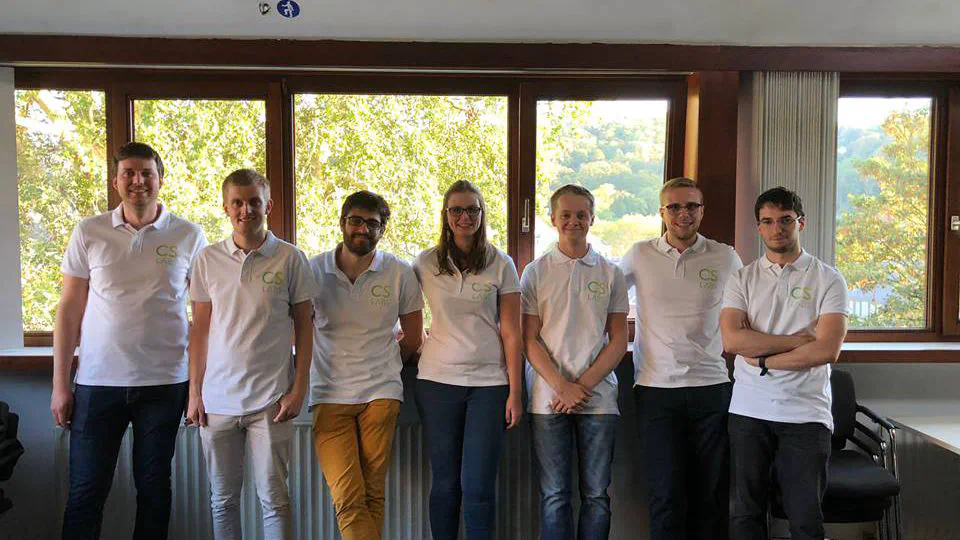
Computer Science Labs (CSLabs) CSLabs is a non-profit organisation founded by students from Unamur’s Faculty of Computer Science, in order to promote computer science externally and provide trainings in different fields by and for students.
Education
-
National Qualification for Associate Professor (Maître de Conférences)
Section 27 - Computer Science -
PhD in Software Engineering
University of Namur -
MSc in Computer Science, specialised in Software Engineering
University of Namur -
BSc in Computer Science
University of Namur
-
INFOM115 - Software Testing:
Organisation: Session labs and lectures for a total of 15h
Public: 1st year Masters students, specialised in Software Engineering, from the computer science faculty of the University of Namur, Belgium
Content: Supervised by Dr. Gilles Perrouin, we teach the fundamentals of software testing and more advanced techniques (mutation testing, metamorphic testing, fuzzy testing, test smells, etc.)
Academic years: 2019-2020, 2020-2021, 2021-2022, 2022-2023
-
INFOB221 - Mathematics Fundamentals for Computer Science (part 2):
Organisation: 15h of tutoring
Public: 2nd year of Bachelor students from the Economics and Computer Science faculties of the University of Namur, Belgium
Content: Basic concepts of Mathematics for Cryptography mainly (modular arithmetic, discrete log, symmetric encryption and asymmetric encryption, elliptic curves)
Academic years: 2019-2020, 2020-2021, 2021-2022
-
IHDCB339 - Introduction to the Scientific Approach:
Organisation: One group project supervision
Public: 3d year of Bachelor students from the Computer Science faculty of the University of Namur, Belgium
Content: In this project, I supervised a group of two students, guiding them in developing essential skills such as bibliographic research, critical source appraisal, scientific state-of-the-art writing, and effective scientific result presentation, while also ensuring a deep understanding of research problem definition, context, motivation, and related work within the field of information systems.
Academic years: 2020-2021
Distinguished Reviewer Award
Distinguished Reviewer Award
I’m taking part in several committees and helping the community in various ways:
-
Guest Editoring :
- Q-SE 2026 Special issue, as part of Springer Automated Software Engineering journal ;
- Q-SE 2026 Special issue, as part of Springer Automated Software Engineering journal ;
-
Organising workshops and conferences :
- VARIABILITY 2026 (proceedings chair) ;
- Q-SE 2025 and 2026 (web & publicity chair) ;
- SPLC 2024 (publicity co-chair) and 2025 (doctoral symposium co-chair) ;
- QSANER 2025 (co-chair) ;
- ICTSS 2024 (challenge track co-chair) ;
- LearnAut 2024 (co-chair) ;
- VARIABILITY 2026 (proceedings chair) ;
-
Reviewing :
-
for specialised conferences: ICSR (research track, as a subreviewer), SPLC (research track, demo & tools), ESEC-FSE (artefacts), ECOOP (artefacts, extended review committee), SSBSE (challenge track), ICTAC (research track), BENEVOL, VaMoS, ICST (poster track, educational track), GI @ ICSE, ISSTA (artefacts), Re:Volution, ASE (student research competition), CAiSE (research track), GPCE (research track), womENcourage (poster track), VARIABILITY (doctoral symposium, project showcase) ;
-
for journals: EMSE, TOSEM, JSS, TSE, SQJ, SoSyM, STVR, SCICO ;
-
-
Contributing to the Strategic Reflection Group on Software Variability Conferences, uniting SPLC, ICSR, and VaMoS to shape the future of the field and foster synergies ;
-
Acting as a Student Volunteer for OR 2018 and SPLC 2023 ;
-
Representing scientifics at the UNamur Computer Science Faculty Council ;
-
Representing and promoting the UNamur Computer Science Faculty at several Students Fairs ;
-
Representing scientifics at the Section Groups, the place where students can express themselves to improve the UNamur Computer Science faculty.
Check out my activities and interests, extending beyond research!